Friday, March 30, 2012

Final Blog Post

Presentation:

Chinese Cinderella takes place during the time of Japanese occupation in China in the 1940s.
For Adeline, the environment is hostile. She and her siblings cannot have friends over after school, and they are also restricted to what parts of the house they allowed to be in. Throughout the story, heart strings are being pulled because the story is from the view point of a child and has a tragice undertone to it. During this time period, it is evident (page 127) that it was important to learn English because Adeline is forced to speak English rather than Mandarin. As for the culture, a major aspect was that feet were bound as on page 7, "'When i was three years old, a tight bandage was wound around my feet, bending the toes under the sole and crushing the arch so that my feet would remain small all my life. This has been the custom in China for over a thousand years, ever since the Tang dynasty'" Also for the culture, siblings did not call each other by name, but rather by Fifth Younger Sister or Second Brother. Foot binding can be negative as it causes problems into the latter stages of life. Today, we cannot imagine having feet the size of a three year old's. Also, what the siblings called each other is different from today because most people probably do not call their siblings Second Brother. In Chinese Cinderella, there is mainly discrimination towards Adeline because they considered her a curse because her mom died shortly after giving birth. She was basically regarded as useless. Again for the time, it took place in the 1940s when Japan was occupying China. Internationally, we were involved by fighting Japan and forcing them out of China. The book's topic is a good one because it is realistic. However, the Chinese are still not treated as humanely as possible considering the way Chinese labor is. As a solution, some people choose to boycott stores that seem to endorse this, such as Walmart. International Humanitarian Law is not violated specifically in this book, but in the time period, surely children were not treated the way they should be. Furthermore, in present-day certainly some laborers are not treated as well as they should be treated.


Mah, Adeline Yen. Chinese Cinderella. New York: Laurel-Leaf, 1990. Print.

Final Blog Post

Critique:
Chinese Cinderella was an eye-opening book. I would strongly recommend it to others as it allows you to enter into the culture, without feeling like you are reading a history book. Chinese Cinderella is a story about a girl, Adeline. Shortly after giving birth, Adeline's mother dies, and her family views her as a curse/disgrace to the family. When her father remarries, Adeline's life becomes worthless to the rest of her family, and the only person she has to count on is her aunt Baba. When Aunt Baba starts to do things against the way Adeline's stepmother wants them, Adeline can no longer spend as much time with Aunt Baba, who is the only one that loves Adeline. When a family friend gives Adeline's family a gift for all the children, Adeline does not get to pick as she is the last one and there is only one left: a duckling. For Adeline, this duckling is the most precious thing, hence the name Precious Little Treasure, PLT for short. Eventually, Adeline is sent off to boarding school, and later goes to college and attend medical school. I would give this book a 9.5 out of 10 rating. It was very easy to read and quite captivating. There are no very graphic moments, however for someone who is very animal friendly, when PLT is killed by their dog, that could possibly be horrific, but nothing substantially graphic.

Friday, March 16, 2012

ICRC

One international aid organization that Mr. Milo follows on Twitter is the International Committee of the Red Cross. The ICRC promotes International Humanitarian Law in many countries around the world. In their gift shop, there are many items to choose from. The proceeds go to help keep the business operating so they can continue to help around the world.

Tuesday, March 13, 2012

Related Blog!

The following link is to a website that gives statistics on deaths of asian populations post World War I. The site does not have a bias toward any one country or person. It gives an explanation as to why the Japanese may have done such things. Furthermore, it provides numerical values and statistics in reference to the killings.
http://hawaii.edu/powerkills/SOD.CHAP3.HTM

Friday, March 2, 2012

Favorite Parts of Chinese Cinderella

My first favorite part of Chinese Cinderella is on page 1 when Adeline comes into her aunt Baba's room with her medal for leading the class. Aunt Baba is so proud of her and treats the certificate that goes with the medal just as it is one of her precious gems, which shows how proud she is of Adeline.

Another favorite part is on page 73 when Adeline receives her baby duckling. Despite the fact that it is the runt, Adeline is so thrilled. She names it Precious Little Treasure which shows her pride and how she actually has something that is hers and hers alone, and something that is even with her other siblings.

Monday, January 23, 2012

Chinese Cinderella

A Chinese proverb says, "Falling leaves return to their roots." In Chinese Cinderella, Adeline Yen Mah returns to her roots to paint an authentic portrait of twentieth-century China as well as to tell the story of her painful childhood and her courage and ultimate triumph over despair.
After her mother dies giving birth to her, Adeline's affluent, powerful family considers her bad luck. Life does not get any easier when her father remarries. She and her siblings are subjected to their stepmother's disdain, while her half brother and half sister are thoroughly spoiled. Although Adeline wins prizes at school, they are not what she really yearns for-- the love and understanding of her family.


I chose the book because it is a real life take on a well known fairytale and it will be interesting to learn more. I hope to learn about chinese culture and have any questions in my mind settled.

Tuesday, January 3, 2012

Three Solutions That Can Help Restore Coral Reefs

1. Reducing the fishing of species of reef fish. Reducing the fishing of these species of fish can help restore coral reefs because studies have shown that a decline in reef fish is connected to a decline in the coral reefs.

2. No longer allow dynamite fishing practices. When fishers use dynamite when they fish, coral reefs are destroyed, which means a habitat for many species of animals is destroyed.
3. Proper training for tourists and other people who will be around coral reefs when scuba diving, etc. These people who deal with corals contribute to reef destruction because by touching, kicking, kneeling, etc. these people destroy the reefs. These careless mistakes could be prevented by proper training.

International Relations Paradigms

Marxism:


Marxism could explain the problem of coral reef destruction in Fiji because Fiji is fairly dependent upon tourism to the coral reefs as a source of income for their economy. Because of the tourism, money goes to the government, which helps everybody in the country. Coral reefs are a major source of income they can benefit all the people, and when the coral reefs are being destroyed, there is a decrease in tourism, which negatively impacts the economy.


Realism:


Realism can also explain this problem because realism developed from idealism, which emphasizes international law and organizations which can be used in Fiji with the coral reefs. International tourists are a big part of coral reef tourism in Fiji.

Saturday, December 17, 2011

Interview

This is an interview with Amy Gerber, a teacher who teaches her students about coral reefs and then they visit some coral reefs in the Bahamas.

What effect do coral reefs have on the oceans?
A Healthy Coral Reef
  • Coral reefs are almost as species rich and species diverse as a tropical rainforest. They provide the habitat for countless species of plants (algae), invertebrates, and fish and support an extensive food web. Coral reefs (especially barrier reefs) also act as shoreline protectors by absorbing energy from the ocean.


How can bleached coral reefs become unbleached?
  • Once the coral polyps have died from bleaching there is no way to bring them back. However, the entire coral boulder/head may not be affected and parts that are not affected can recover. A new generation of coral can settle and build on the bleached area as long as the habitat is healthy. 

What are some ways to prevent bleaching and destruction of coral reefs?
  • Understanding bleaching is still not 100%. When coral becomes "bleached" it is spitting out the zooxanthellae algae that it lives symbiotically with and as a result loses its color. There are several potential causes for this including increased temperature and chemical pollution. To prevent bleaching we need to better understand the causes then try to reduce/eliminate the causes.
A Dead Coral Reef


In what way are coral reefs one of the most productive ecosystems?
  • There is a lot of energy at the base of the ocean food chain. The algae photosynthesizes and produces both oxygen and glucose making the ocean a very productive system.

Sunday, November 6, 2011

Coral Reef Destruction in Fiji

Background:

Coral reefs are on of the most diverse ecosystems throughout the world. They provide a habitat for about 25% of all marine species. The coral reefs found today are a result of production anywhere from 5,000 to 10,000 years ago. The corals are actually very small, and the reefs are made up of of calcium carbonate, which is secreted by the corals. The corals that are able to produce reefs are called hermatypic. Reefs are usually found in clear, tropical waters(61°F to 86°F) that are low in phosphorus and nitrogen, and have a stable temperature and salt content. There are three types of reefs: barrier reefs, fringing reefs, and atolls. Pain-killers and anti-cancer drugs have been developed from coral reefs, and research is being done to use the coral reefs as an example on how to increase bone growth in humans. Besides the beauty of the reefs, they are beneficial to the health of humans.


Troubles:


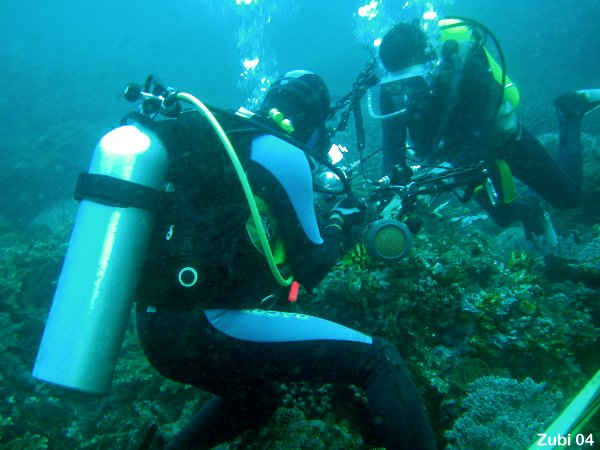
There have been troubles with coral reefs recently because of rising water temperatures, destructive fishing practices, and careless divers. Because of rising water temperatures, coral reefs are becoming bleached. Bleaching is the loss of all color in the corals. This happens in any type of stress, but especially the stress of higher water temperatures. With the destructive fishing practices, using dynamite or cyanide can horribly damage the reefs. Fishers also ruin the reefs because they harvest the coral for aquariums. Divers can damage the corals by touching them. When touching them, the divers can injure the corals, or possibly kill the coral reefs.


Importance:
In Fiji, 80% of people live on the coast, and they rely on the income based on marine life. Fiji has rare marine species in its coral reef compared to the coral reefs throughout the rest of the world.


Solutions:


People that are around the coral need to be more careful. Divers who will be diving around the coral reefs need to be educated about the coral reefs before they should be allowed to dive. Fishers need to be informed about the location of the corals and not fish around there to support the life of the coral reefs.